


Dental implants vs bridges vs dentures is one of the most searched cost questions in dentistry because the upfront price tags tell an incomplete story. The option that seems cheapest today can easily become the most expensive choice by year ten.
This guide focuses specifically on the true 20-year financial picture for patients weighing tooth replacement options in the greater Paoli, PA area.
The most common mistake patients make is comparing only the day-one price. A dental implant may cost three to four times more upfront than a denture, but factor in relining, adhesives, replacements, and bone loss complications over two decades, and the math often reverses. According to the American Dental Association, implants carry the highest long-term success rate of any tooth replacement option, with studies reporting 95% or better survival at 10 years.
What Each Option Actually Costs: A Side-by-Side Look
Prices below reflect general U.S. industry ranges for 2026. Individual fees vary by provider, case complexity, and location. These are market ranges – not the fees of any specific practice.
The 20-year totals above include estimated replacements, relining (dentures), and routine maintenance. Bone grafting or extractions add to any of these figures depending on the patient’s existing bone volume.
Thinking about this for your situation? Contact usand we’ll walk you through your specific options – no pressure, just straight answers.
Dental Implants vs Bridges vs Dentures: Which Option Wins Long-Term?
Where dental implants succeed: Implants integrate with the jawbone (a process called osseointegration), which prevents bone loss. They function exactly like natural teeth, require no adhesive, and do not damage adjacent teeth. With proper care, many last a lifetime.
Where dental implants fall short: Surgery is required. Not every patient has adequate bone density without a graft. The upfront cost is the highest of the three options, and insurance coverage remains limited under most Pennsylvania dental plans in 2026.
Where bridges succeed: No surgery needed. The procedure is faster – typically completed in two to three visits. Bridges are more likely to receive partial insurance coverage than implants.
Where bridges fall short: Healthy adjacent teeth must be ground down to serve as anchors, which weakens them permanently. Bridges do not stop bone loss beneath the gap. Replacement every 10 to 15 years is common.
Where dentures succeed: Lowest initial cost. Non-surgical. A viable full-arch solution when many teeth are missing.
Where dentures fall short: They require daily removal and adhesive. Fit degrades as bone resorbs, requiring relining every 1 to 2 years and full replacement every 5 to 10 years. Long-term bone loss can alter facial structure.
The verdict: For patients replacing one or a few teeth with sufficient bone, implants deliver the best long-term value and health outcomes. Bridges are a reasonable middle ground when surgery is contraindicated. Dentures are appropriate for full-arch replacement on a budget, though implant-supported overdentures are closing that gap in 2026.
Pennsylvania Insurance and Out-of-Pocket Reality
Pennsylvania dental insurance plans vary widely. Most traditional plans classify implants as major restorative item, meaning patients typically pay 50% out of pocket. Bridges tend to receive 50% coverage under major restorative benefits. Dentures often fall under the same major restorative category at 50% after the deductible.
Tooth loss is a widespread concern across the United States, and many patients find that insurance reimbursement for replacement procedures is limited regardless of the option chosen. Pennsylvania Medicaid (Medical Assistance) coverage for tooth replacement procedures varies, and eligible patients should contact their plan directly to confirm current benefits for their specific situation.
Many practices in the Chester County area offer in-house financing or work with third-party plans to spread costs. Ask about 0% financing options when comparing providers.
Your Tooth Replacement Decision Checklist
- Step 1 – Assess bone volume: Request a CBCT (cone beam computed tomography) scan to determine whether adequate bone exists for implant placement or if grafting is needed.
- Step 2 – Check adjacent teeth: If neighboring teeth are already crowned or heavily restored, a bridge may make sense. If they are healthy, protecting them by choosing an implant is the better call.
- Step 3 – Review your insurance plan: Get the specific coverage breakdown for implants, bridges, and dentures from your insurer before your consultation.
- Step 4 – Calculate the 20-year total: Ask your provider for expected replacement timelines and maintenance costs, not just the day-one quote.
- Step 5 – Factor in health conditions: Diabetes, smoking history, and certain medications affect implant success rates. Discuss these openly at your evaluation.
Pre-Appointment Preparation Checklist
- ☐ List of current medications (especially blood thinners or bisphosphonates)
- ☐ Recent dental X-rays if available
- ☐ Insurance card and benefits summary
- ☐ List of questions about recovery timeline and maintenance
- ☐ Notes on any teeth-grinding or jaw clenching history
Frequently Asked Questions
How much do dental implants cost without insurance in Pennsylvania?
A single dental implant in Pennsylvania typically ranges from $3,000 to $5,500 out of pocket in 2026, including the implant post, abutment, and crown. Bone grafting, if needed, adds $500 to $3,000 depending on graft size and material used.
How long do dental bridges last compared to implants?
Dental bridges typically last 10 to 15 years with proper care, while implants can last 20 years or longer and often a lifetime. Bridge longevity depends heavily on the health of the anchor teeth and daily oral hygiene habits.
Are dentures a good long-term option?
Dentures are functional but carry the highest long-term replacement burden of the three options. Most patients reline dentures every 1 to 2 years and replace them every 5 to 10 years as bone loss reshapes the jaw ridge beneath the appliance.
Do dental implants hurt more than getting a bridge?
Implant placement is a surgical procedure done under local anesthesia, and most patients report moderate soreness for 3 to 5 days afterward. Bridge preparation involves reshaping adjacent teeth, which can cause temporary sensitivity but no surgical recovery period.
Will dental insurance cover any part of implant costs in 2026?
Most traditional dental insurance plans still classify implants as cosmetic or excluded, though some PPO plans now offer partial coverage up to their annual maximum. It is worth requesting a pre-authorization letter from your insurer before scheduling treatment so you know the exact reimbursement amount.
What is the best tooth replacement option for someone missing multiple teeth?
For patients missing several teeth in the same arch, implant-supported bridges or implant-retained overdentures typically offer the best combination of stability and bone preservation. Traditional dentures remain a cost-accessible alternative, but expect more ongoing maintenance and fit adjustments over time.
Key Takeaways for Paoli-Area Patients in 2026
At Think Oral Implants and Periodonticsin Paoli, PA, we see patients from Wayne, Berwyn, Malvern, Devon, Exton, Villanova, and the greater Chester County area who are working through exactly this decision. Our approach is built on giving you the full picture – not just the lowest quote.
Ready to take the next step? Contact ustoday for straight answers about which tooth replacement option fits your health, your budget, and your long-term goals. Early evaluations make a real difference – bone volume and adjacent tooth health change over time, so the sooner you have the information, the more options remain open to you.
This content is for educational purposes only and is not a substitute for professional dental advice. Always consult a licensed dental provider for diagnosis and treatment recommendations specific to your situation.
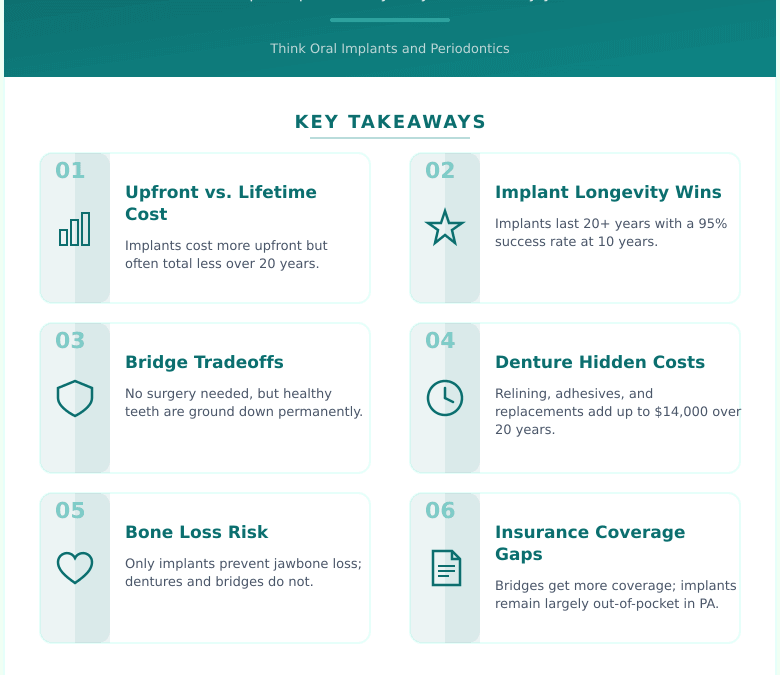
- Upfront cost is not total cost – dentures and bridges carry hidden replacement and maintenance expenses that add up significantly over 20 years.
- Implants prevent bone loss – the only option that actively maintains jaw structure after tooth loss.
- Insurance coverage varies widely – always verify benefits before committing to a treatment plan.
- Bone volume determines eligibility – a CBCT scan is the first real step in any implant evaluation.
- The 20-year math often favors implants – especially for single-tooth replacement in otherwise healthy mouths.
About the Author
The Think Oral Implants and Periodontics Team , serving patients in Paoli, PA and the surrounding Chester County communities. For more information about our approach to implant and periodontal care, visit our homepage or explore our services.