


Receding gums are a condition where gum tissue gradually pulls away from the tooth surface, exposing the root underneath. Left untreated, this process accelerates tooth sensitivity, bone loss, and eventual tooth loss.
This guide focuses specifically on identifying the warning signs of gum recession that require professional treatment before permanent damage sets in.
Here is the hard truth: gum tissue does not regenerate on its own. Once it pulls back, it stays back. That distinction matters enormously because many people assume their gums are just “a little sensitive” and that the problem will resolve with better brushing. It won’t. According to the National Institute of Dental and Craniofacial Research, periodontal disease affects a significant portion of American adults, and gum recession is one of its most visible and damaging signs. The most common mistake we see is patients waiting until a tooth becomes loose before seeking care, at which point treatment options narrow considerably.
Why Receding Gums Are a One-Way Street
Gum tissue is not like skin. It lacks the regenerative capacity to fill back in after it has pulled away. What you lose, you lose permanently without clinical intervention. This is why early detection changes everything.
Gum recession: A condition that progresses slowly, often without pain, which is exactly why so many people miss the window for simpler treatment.
Periodontal disease: A bacterial infection of the structures supporting your teeth, including gums and bone. Periodontal disease is a common cause of gum recession in adults, along with factors such as aggressive brushing, smoking, genetics, and thin gum tissue.
Recent data shows that approximately 47% of adults over 30 in the United States have some form of periodontal disease. Prevalence increases significantly with age. Recession often begins quietly, with patients noticing sensitivity to cold drinks before they notice anything visually wrong.
The Red Flags You Should Not Ignore
Some symptoms are easy to dismiss. Others are signals that the problem has already moved past early-stage territory. Knowing which is which could save your teeth.
If any of these symptoms apply to your situation, seeking a professional evaluation promptly gives you the best chance of preserving your options.
Thinking about this for your situation? Let’s talk. Contact us and we’ll walk you through your options with no pressure and no guesswork.
- Teeth that appear longer than they used to
- Sensitivity when eating or drinking cold, hot, or sweet items
- A visible notch or groove near the gumline
- Gums that bleed during brushing or flossing
- Loose teeth or shifting bite alignment
- Persistent bad breath that doesn’t clear with brushing
- Swollen, red, or tender gum tissue
Watchful Waiting vs. Active Treatment: Which Approach Works?
Where watchful waiting succeeds: Appropriate for very mild recession with no bleeding, no bone loss, and stable measurements confirmed at back-to-back dental visits. Can work alongside improved hygiene habits.
Where watchful waiting fails: Provides no tissue recovery. Recession continues to advance in most cases, especially when bacterial load is not addressed. Often delays treatment until damage is more costly to correct.
Where active treatment succeeds: Stops the progression directly. Regenerative procedures can restore lost tissue and bone. Earlier intervention means less invasive procedures and better long-term outcomes.
Where active treatment fails: Does not guarantee permanent results if underlying causes like grinding, poor hygiene, or gum disease are not managed after treatment.
The verdict: Active treatment wins in nearly every case where recession is measurable and progressing. Waiting costs more in both tooth structure and out-of-pocket expense over time.
What Treatment Actually Looks Like in 2026
Treatment options have improved substantially. Patients in Paoli and the surrounding Main Line communities are no longer limited to traditional scalpel-based graft surgery. Minimally invasive approaches now make recovery shorter and the procedure far more comfortable.
Treatment costs vary depending on the extent of recession, the number of teeth involved, and your insurance coverage. Contact your provider for specific estimates.
For a full overview of available care, visit our services page or speak directly with the team at Think Oral Implants and Periodontics, serving patients in Paoli, PA and the surrounding Main Line area.
Your Gum Recession Action Plan
- Step 1 – Self-Assessment: Check your teeth in good lighting for visible root exposure or teeth that look longer. Note any sensitivity patterns and when they started.
- Step 2 – Book a Periodontal Evaluation: Ask specifically for recession measurements, not just a standard cleaning. Probing depths and recession charting give you a baseline.
- Step 3 – Address the Cause: Recession caused by aggressive brushing requires technique correction. Recession caused by gum disease requires bacterial treatment first. Know your trigger.
- Step 4 – Choose a Treatment Path: Review your options with a periodontist. Ask about minimally invasive alternatives and what insurance covers in your plan year.
- Step 5 – Follow Through on Maintenance: Treatment stops the regression, but maintenance keeps it stopped. More frequent periodontal cleanings, typically every three to four months, protect your results.
What to Bring to Your Appointment
- ☐ List of current medications, including supplements
- ☐ Recent dental X-rays if available
- ☐ Insurance card and any secondary coverage information
- ☐ Notes on when symptoms started and which teeth are affected
- ☐ Questions about recovery time and what the procedure involves
Serving Communities Across the Main Line and Beyond
The team at Think Oral Implants and Periodontics welcomes patients from Paoli, Malvern, Wayne, Berwyn, Devon, Exton, Frazer, Swarthmore, Fox Chase, Philadelphia and the greater Chester County area. If you have been putting off a periodontal evaluation, the practices in this region are well-positioned to help you understand exactly what stage of recession you are dealing with and what your real options are.
Key Takeaways for Paoli-Area Patients in 2026
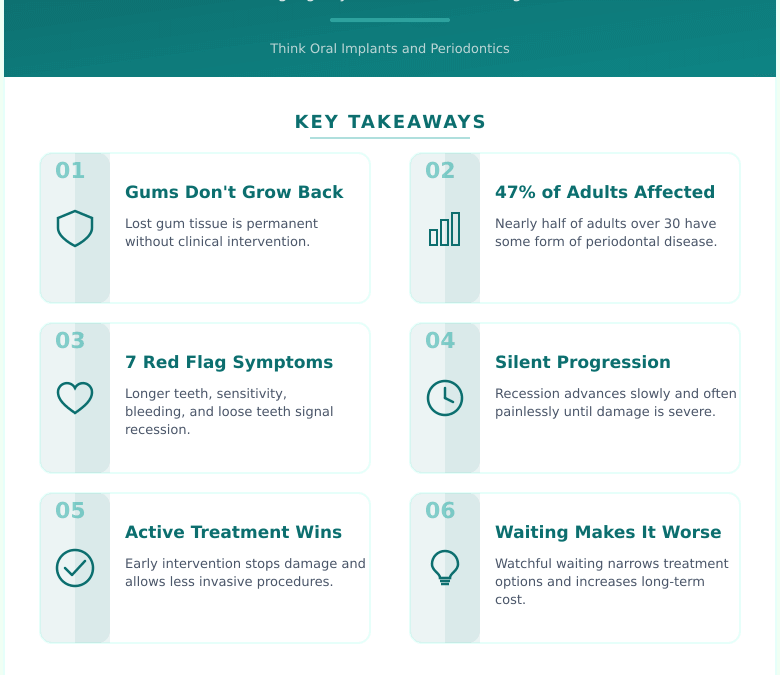
- Gums do not regenerate – once tissue is lost without treatment, it does not return on its own
- Early signs are subtle – sensitivity and slightly longer-looking teeth often precede visible recession
- Treatment timing matters – earlier intervention means less invasive procedures and lower overall cost
- Multiple options exist – from scaling to gingival grafting technique, the right choice depends on your specific case
- Maintenance is non-negotiable – treatment without follow-up care leads to recurrence
Frequently Asked Questions
Can receding gums grow back on their own?
No, receding gums cannot grow back without clinical treatment. Gum tissue lacks the regenerative ability to reattach or regrow once it has pulled away from the tooth. Professional procedures are required to restore lost tissue.
How do I know if my gum recession is serious?
Recession is serious when you can see the tooth root, experience sensitivity, or notice loose teeth. A periodontist measures recession depth at each tooth to determine severity and whether bone loss has also occurred.
Does insurance cover gum recession treatment in Pennsylvania?
Many dental insurance plans cover scaling and root planing, and may cover a portion of the grafting procedures. Coverage varies widely by plan, so contact your insurer directly and ask your provider to pre-authorize treatment before scheduling.
How long does recovery from gum grafting take?
Traditional gum graft recovery typically takes one to two weeks. Minimally invasive gingival grafting options often allow patients to return to normal activity within 24 to 48 hours with significantly less post-procedure discomfort.
What causes gum recession besides gum disease?
Aggressive brushing, teeth grinding (bruxism), misaligned teeth, and tobacco use are all common non-disease causes of recession. Addressing the underlying cause is essential to preventing recurrence after treatment.
How often should I be seen after gum recession treatment?
Most patients are placed on a three- to four-month periodontal maintenance schedule after treatment. This more frequent interval helps control bacterial buildup and catches any signs of progression before they become serious again.
Your Next Step Starts Here
Gum recession is one of those conditions where timing genuinely determines what your options look like. The earlier you get a proper measurement and diagnosis, the more choices you have, and the less invasive those choices tend to be.
Ready to understand exactly where you stand? Contact usto schedule a periodontal evaluation at Think Oral Implants and Periodontics in Paoli, PA. You will leave with a clear picture of what is happening and a realistic plan for what to do next.
The information in this post is intended for general educational purposes and does not substitute for professional dental advice, diagnosis, or treatment. If you are experiencing symptoms of gum recession, please consult a qualified dental professional.
About the Author
The Think Oral Implants and Periodontics Team , serving patients in Paoli, PA and the greater Chester County area. For more information about our approach to periodontal care, visit our homepageor explore our services.